§ How-To
How to Sharpen a Chainsaw Chain
When to sharpen, which file diameter matches your pitch, the correct angles, and why the depth gauges matter as much as the cutters.
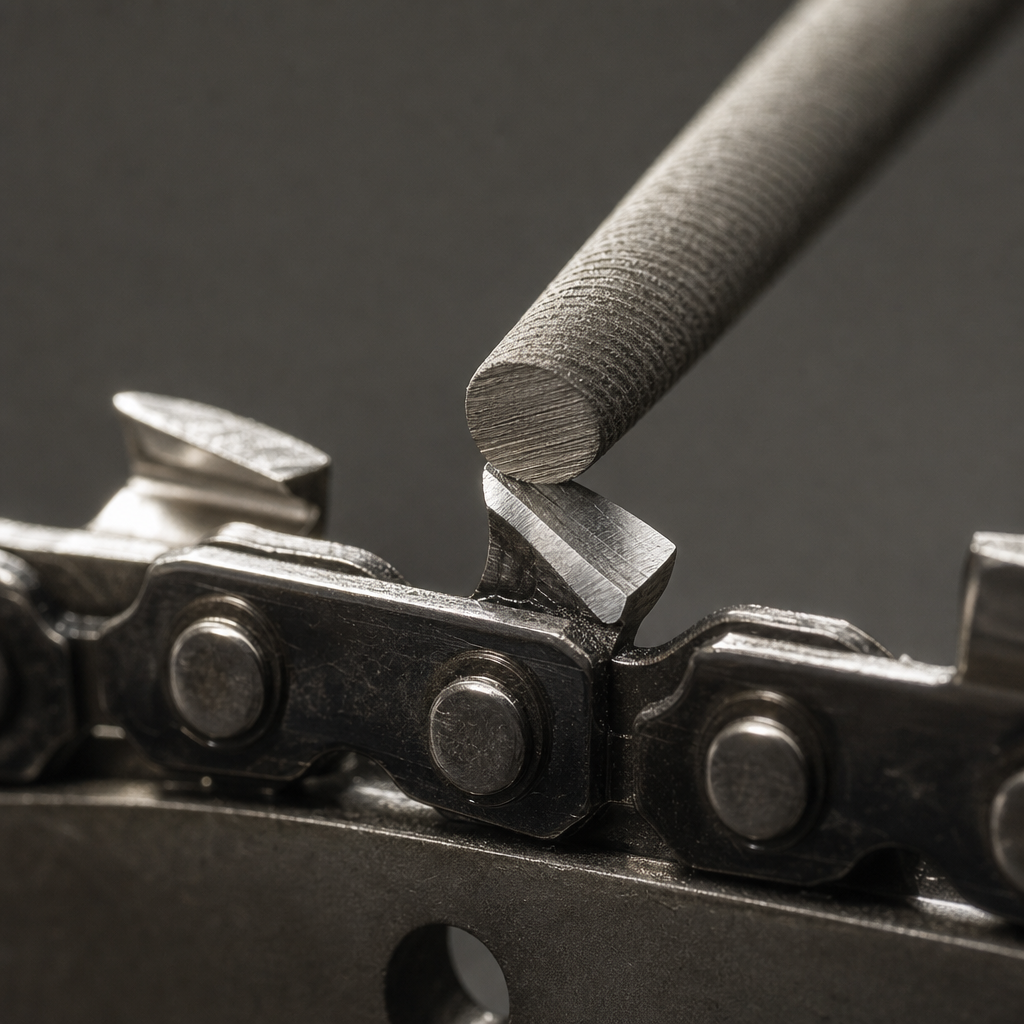
A sharp chain pulls itself into the wood and throws square, chunky chips. A dull chain throws fine dust, needs you to lean on it, cuts crooked, and runs hot enough to glaze the bar. Most people wait far too long to sharpen — touch up the chain at the first sign of dust or after every tank or two of fuel, and you’ll cut faster and wear the saw less.
Match the file to the pitch
The single most important choice is file diameter, and it’s dictated by chain pitch:
| Pitch | Round file diameter |
|---|---|
| 1/4” | 5/32” (4.0 mm) |
| 3/8” Low Profile / .325” | 3/16” (4.8 mm) |
| .325” (some) | 3/16” (4.8 mm) |
| 3/8” standard | 7/32” (5.5 mm) |
| .404” | 7/32” (5.5 mm) |
The wrong diameter changes the cutter’s hook and ruins how it bites. If you’re unsure of your pitch, read it off the bar stamp (how).
Set the angles
There are two angles that matter:
- Top-plate (filing) angle: usually 25–30°. Many cutters have a stamped witness line on the top plate — file parallel to it.
- Down/roll angle: keep the file level (horizontal), letting it ride about one-fifth of its diameter above the top plate.
The easiest way to stay consistent is a clip-on file guide or a roller guide, which holds both the angle and the depth for you. Without one, go slowly and watch the witness mark.
File technique
- Engage the chain brake or clamp the bar so the chain can’t move while you file the side you’re working.
- File from the inside of the cutter outward, with smooth full-length strokes — a file only cuts on the push.
- Use the same number of strokes on every cutter (typically 3–6). Even cutters cut straight; uneven cutters pull the saw to one side.
- Do all the cutters facing one direction, then turn the saw around and do the other side.
Don’t forget the depth gauges (rakers)
Every cutter has a depth gauge in front of it that controls how deep the cutter bites. As you file cutters back over several sharpenings, the cutters get shorter but the rakers don’t — so the bite gets shallower and the saw stops pulling. Every 3–5 sharpenings, lay a depth-gauge tool across the chain and file any raker that protrudes flush, then round its front edge slightly.
When to retire the chain
Cutters have a witness mark showing the minimum length. Once you’ve filed back to it, the cutter is too short to be safe — replace the loop rather than chasing it. Fresh chains are inexpensive next to a thrown chain or a ruined cut; browse Saw Chains or a bar-and-chain combo.
Hand file vs. grinder
A round file and guide is all most users need and is gentler on the chain. A bench grinder is faster for a shop doing many chains or for reshaping a rock-damaged chain, but it’s easy to overheat and soften cutters — light passes, frequent dips, let it cool.